
The Good Fight:
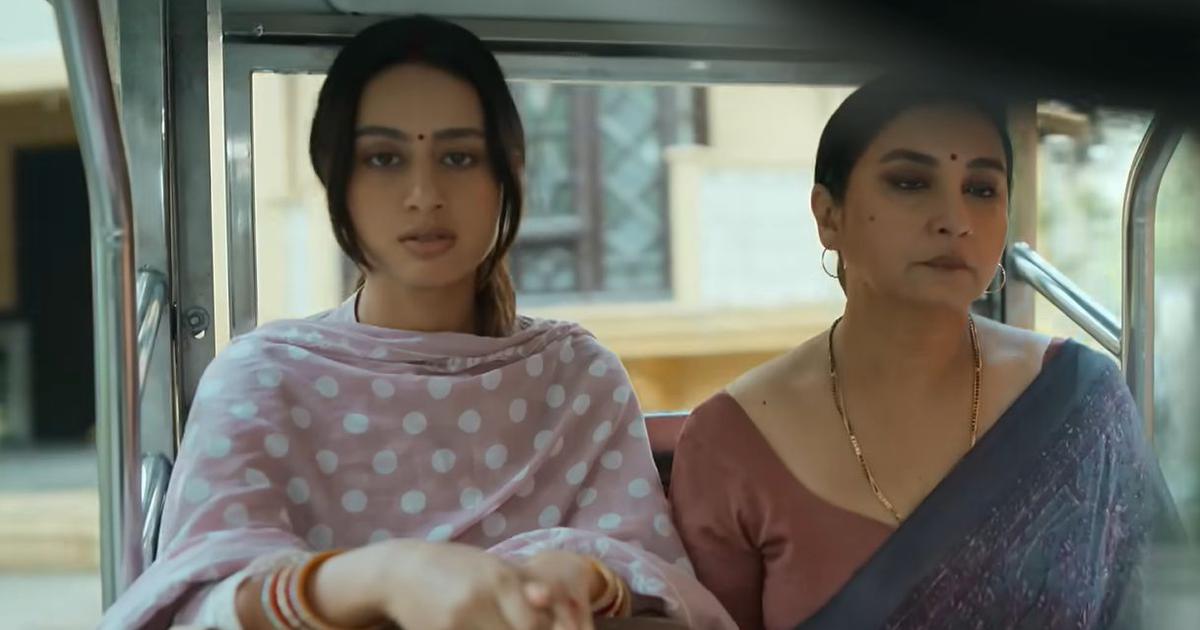
The issue of marital rape is still a legal grey area in India, which gives Shashant Shah’s six-episode series, Chiraiya (On JioHotstar), the ammunition to attack outdated social norms that place family honour over a woman’s dignity.
Well-meaning through the show it, the strangely cardboard characters, simplistic treatment and unconvincing script takes away from the seriousness of the message.
Kamlesh (Divya Dutta) is an extra-traditional woman, who believes that women should even read the news, because a wife’s duty lies in the kitchen. She is not totally uneducated, but misspells her own name, speaks like a village idiot, and disapproves of independent women. This is a bit strange because her husband (Faisal Rashid) is truly progressive, though her father-in-law (Sanjay Mishra) pretends to be egalitarian.
When the family goes to meet a prospective bride for the younger son, Arun (Siddarth Shaw), Kamlesh does not like the woman, Pooja (Prasanna Bisht), because she sings an English song and wears a low cut blouse. But Arun insists, so the engagement goes ahead.
Kamlesh sees Pooja as part of a Pride Parade and is aghast. “Tum lybian ho?” she asks, and breaks off the engagement. The family soothes things over and Arun marries Pooja. Why she agrees to an arranged marriage without even talking to the potential groom is odd. On the wedding night, encouraged by the usual male buddies telling him to prove his dominance, Arun forces himself on Pooja when she refuses, saying she is unwell. Pooja immediately mutters rape and runs away. She is sent right back by her mother, who says “these things” are a part of marriage. Arun believes marriage has given him the legal right to override his wife’s protests and rape her at will.
When she sees Pooja’s suffering, Kamlesh decides to stand up against the family and get justice for her sister-in-law, only to be informed by her lawyer grandfather (Tinnu Anand) that there is no law against marital rape. Kamlesh also realizes that her own encouragement of patriarchy turned Arun into an unfeeling monster.
When a film picks up a placard of protesting a social ill, there is no room for subtlety or realism. Everybody makes statements, everybody has epiphanies, and everybody has a point-of-view, even the so-far silent, ladoo-eating grandmother (Sarita Joshi). Writer Divya Nidhi Sharma batters the issue on the head, but remains within the sanctity of the family. Kamlesh declares her own reform, and sudden understanding of the system that oppresses women, but never does she tell Pooja—the woke one who talks of consent and equality—to walk out of the marriage. For her, the beginning of a woman’s independence begins from making a dish of her own choice! The hypocrisy of this kind of half-baked feminist awakening does nothing for the cause.
(This piece first appeared in seniorstoday.in)
