
Lost Lover:
The film goes into carnage mode without wasting much time. A man enters a movie theatre, “Kaun hai tu?” someone asks. “Hero,” he replies, as the song Dhak Dhak Karne Laga plays on the screen. The ‘hero’ kills a lot of men, dances while he is at it, imitating the song’s heaving and thrusting moves. The scene that follows justifies the bloodshed.
The ‘hero’ of Vishal Bhardwaj’s Tarantinoesque film O’ Romeo, is Hussain Ustra (Shahid Kapoor) who is known to pull out the soul from the body he has slashed with a barber’s razor (ustra); but he is working for an Intelligence Bureau officer, Ismail Khan (Nana Patekar), who wants to destroy the drug gang of the Spain-based gangster, Jalal (Avinash Tiwary).
The heavily tattoo-ed Ustra lives by the Mumbai seafront like the satrap of a small estate—minions serving him hand and foot; the most loyal one (Hussain Dalal), reads him the newspaper, sources his “bed warming” hookers, and keeps the gang sharp. Ustra spends a lot of time grooving and romancing dancer Julie (Disha Patani) – his heart being in his groin, not his chest, as a character says.
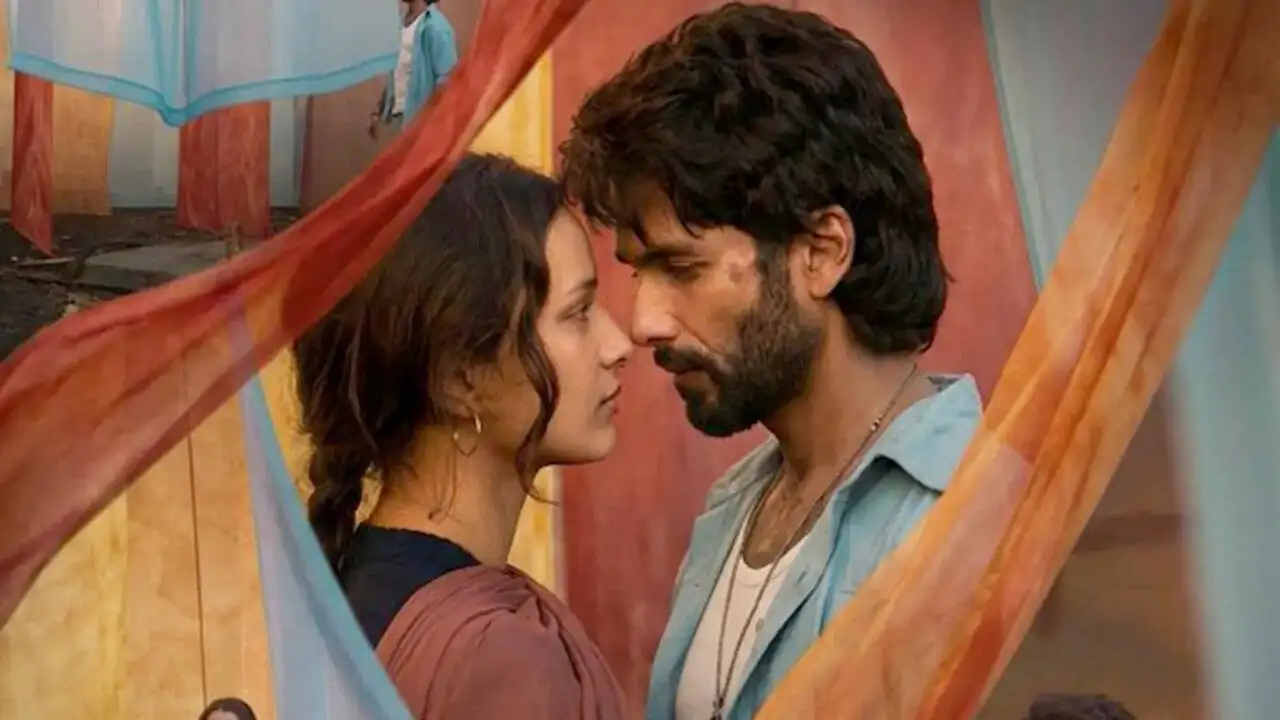
Ustra’s plans to skip the country are derailed by the appearance of a distressed-looking woman, Afshan (Triptii Dimri), approaching him to take on a contract to kill four men, who were responsible for the murder of her husband (Vikrant Massey). They include a classical music-singing cop, Pathare (Rahul Deshpande), and the bull-fighting matador Jalal. Ustra already has history with Jalal—he had killed the gangster’s brother— and the hate is so strong that Jalal says, if Ustra dies, he will somehow feel it.
The carefree Ustra falls madly in love with Afshan, and decides to put his own life on hold to help with her revenge, and becomes the Romeo of the title (as in the street slang for a lovelorn bozo, not Shakespeare’s tragic hero).
It’s an ordinary plot about a man’s obsession, but Bhardwaj lays it out like a lavish spread, with stylish and very violent action set pieces, effectively used music (Bhardwaj composes Gulzar’s delectable lyrics), and a romance that has moments that are tender as well as bitter. There is excess and there are sudden insights (like Ustra observing that after Babri Masjid even crime got communalized). The film is set in the 1990s, in the Muslim quarter of South Mumbai, when there was a rise in organised crime in Mumbai.
The film based on a Hussain Zaidi story, scripted by Bhardwaj and Rohan Narula, shot with an epic sweep (Ben Bernhard, Saurabh Goswami) in vibrant colours, speaks of an uncontrollable, yet chaste passion, that is like old-style aashiqi, that is devoted to the beloved. If there is poetry in the emotions, unfortunately, there is also gratuitous violence, that actually takes away from the enjoyment of the action scenes.
Shahid Kapoor is styled like a cowboy and combines a swaggering body language with intensity and sometimes an almost child-like obstinacy. Having worked with the director in the past, there is that collaborative trust that results in a character, who is not likeable, but still demands sympathy. Triptii Dimri is not the shrinking violet love interest of the past, she is fearless and resolute. Avinash Tiwary, with his striking appearance, does not have many scenes, but when he is on screen he dominates it.
(This piece first appeared in rediff.com)
