
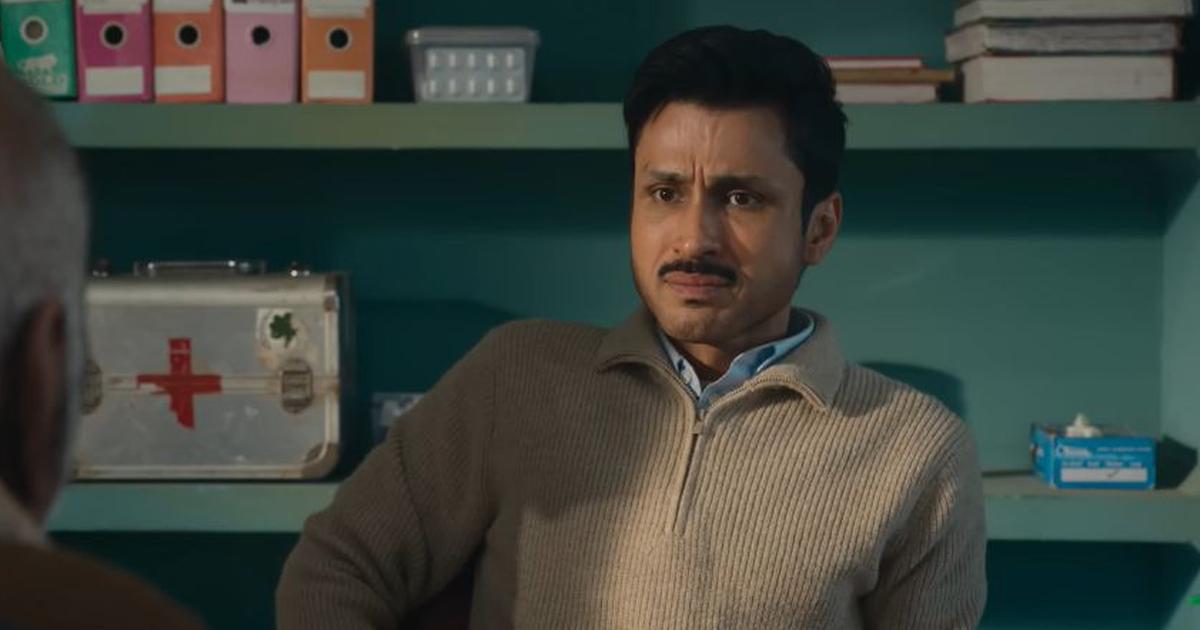
The Good Doctor:
The first season of Gram Chikitsalay (2025) seemed like Panchayat redux—different village with a cute name, different profession given to the protagonist, but a similar template about a well-meaning city man clueless in rural India. It is a kind of speciality of the production house TVF, that they make shows about the real India, that somehow manage to hide the grime under layers of humour.
Dr Prabhat (Amol Parashar), son of a wealthy Delhi doctor, with a hospital waiting for him to manage, chooses instead to take up a low paid job as the medical officer (MO) at the primary health centre (PHC) of a remote village called Bhatkandi in Jharkhand. He believes that’s where he is needed and can make a difference.
Problem is the village doesn’t really care about yet another MO, who won’t last. They are quite happy with the phony “jholawala” Dr Chetak (Vinay Pathak), who makes up for the lack of a degree with an understanding of the rural pulse.
Prabhat had to first evict the farmer who has usurped the PHC’s land, and then teach the value of professionalism and honesty to his staff of three—the compounder Phutani (Anandeshwar Dwivedi), ward boy Govind (Akash Makhija) and cleaner Dhelu (Kartikay Raj). Nobody expected an MO to actually land up and stay on, so they are caught unprepared. Like the administrative office in Panchayat, the Gram Chikitsalay was non-functional too,
By the time the second season arrives (five episodes on Prime Video), Prabhat has straightened things out a bit, and befriended Dr Gargi (Akansha Ranjan Kapoor). A few patients have started trickling in, mostly eccentric village hicks—like the man who brings a stool sample in a mithai box! Prabhat still hasn’t shed his idealism or his uptight schoolmaster-ish manner. He uses a bicycle to move around the village, prissily wearing a helmet, which prompts Phutani to comment that nobody bothers to wear one in the village even on a motorbike.
There are two main concerns in this season – Prabhat’s wish to win the Adarsh Chikitsalay prize, so that he won’t always have to borrow medicines from Gargi’s centre; the other being Govind’s struggle to make his temporary job permanent, for which he has to pay a bribe in cash or kind – the latter giving the show some interesting social messaging to do with the region’s propensity to kidnap eligible grooms or the “pakadwa vivaah.” The stone in the craw of both Prabhat and Govind is the corrupt chief medical officer (Dinesh Lal Yadav).
Directed by Lalitam Tiwari, written by Vaibhav Suman and Shreya Srivastava, created by Deepak Kumar Mishra and Arunabh Kumar, has better developed characters, snappier humour and the kind of dramatic turns that make the viewer care for what happens the characters – the woman shunned as a daayan (witch), a pregnant woman who has faith in Prabhat against the instigation of Chetak. Two characters from Panchayat’s Phulera village wander into this one – like marking the beginning of TVF’s wider rural universe
In the last season Chetak taught Prabhat the value of the right mode of communication with the villagers, this time Gargi sets him right when he starts whinging about sacrifice and compromise.
Prabhat grows up in Season 2, takes off his blinkers and if there’s a Season 3, he won’t be such a stick in the mud. The troika of Parashar, Dwivedi and Makhija carry the show, and form a cohesive unit, that, along with the nurse (Garima Vikrant Singh) make their PHC proud by silencing the sceptics in the village. The second part coming soon after the first also helped, since the characters had not yet faded from memory. There is a sense of triumph in this one, of hope and hard-won experience, which is probably when a show knows it could go the distance.
(This piece first appeared in scroll.in)
